
Tracing Textile Production Tools Through Time at a Stratified Farm Mound Excavation in Norse Greenland
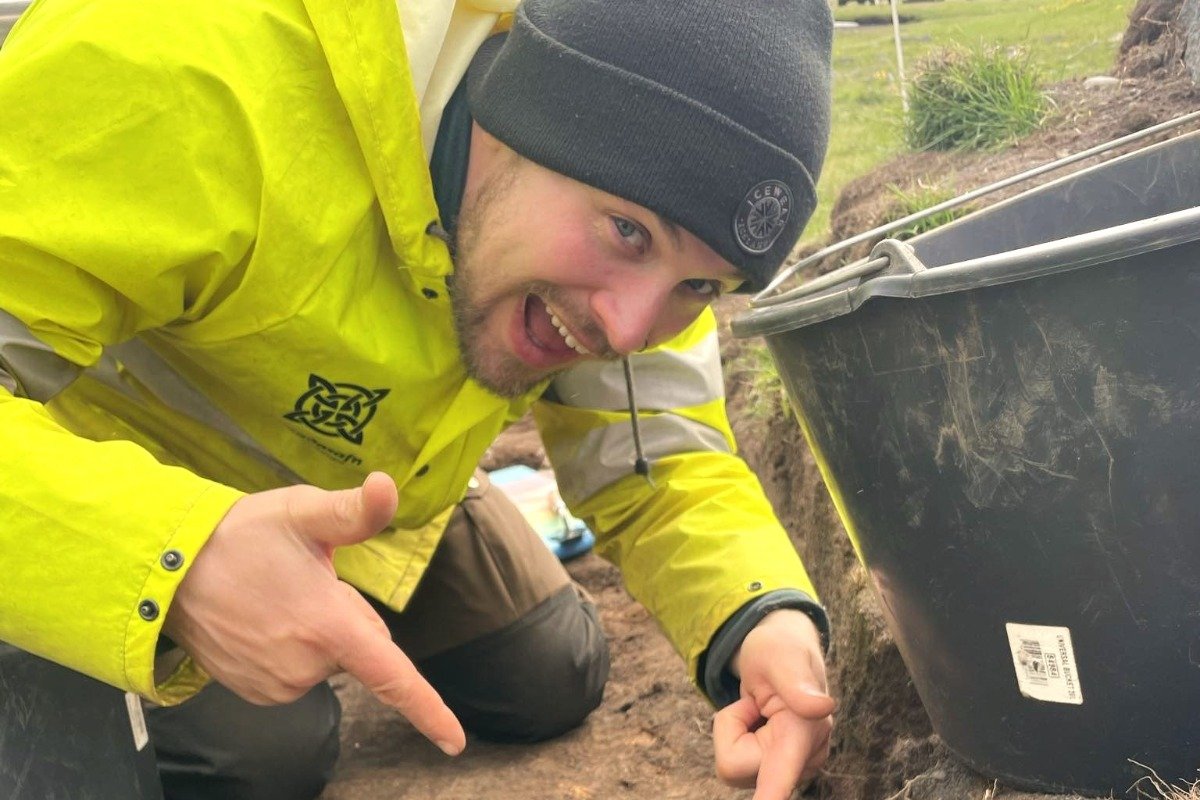
Tracing Textile Production Tools Through Time at a Stratified Farm Mound Excavation in Norse Greenland
Joshua William Needham
This thesis examined the spindle whorls and loom weights from the medieval Norse site the Farm Beneath the Sand in the Western Settlement of Norse Greenland, ca. 1050 – 1380CE. This site is among few medieval Norse farm mounds in Greenland which have been excavated stratigraphically. Therefore, the common and ubiquitous aforementioned tools were used as proxies to determine whether the stratified methodology employed in this excavation allowed for changes in the tools themselves, and spaces associated with their use to be traced over time. To this end, the theoretical frameworks of Artifact Biography and Household Archaeology were utilized. The results of the analysis showed that the proportion of artifacts from the earlier phases of the site’s occupation were significantly smaller than those from the later occupation periods, making changes over time impossible to detect. However, the results of this thesis did illuminate notable aspects of steatite usage and resource acquisition in the western settlement. Furthermore, a comparison to another stratified excavation of a largely contemporary farm mound at Stóraborg in Iceland with a similar dichotomy between the earlier and later phases was made, lending some support to the suggestion that farm mound formation processes may directly affect the accumulation of artifact assemblages over time.
Fyrirlesturinn er hluti af Nýjar rannsóknir í fornleifafræði 2025, fyrirlestraröð Félags fornleifafræðinga og námsbrautar í fornleifafræði við Háskóla Íslands. Fyrirlesturinn fer fram kl. 12 í stofu A050 í Aðalbyggingu HÍ en honum verður einnig streymt á Zoom, hægt að fylgjast með hér: Fyrirlesturinn í streymi